
 13 July 2026
 886
886The global automotive and general engineering sectors operate in a highly demanding environment where operational efficiency dictates market leadership. To remain competitive, modern manufacturers must consistently output complex components while systematically driving down operational costs. In this landscape, profitability depends heavily on maximizing the time the cutting tool is actively engaged with the material. The multi-spindle Rotary Table stands as a transformative mechanical innovation for Vertical Machining Centers, fundamentally redefining CNC productivity and elevating manufacturing efficiency to remarkable new levels of excellence.
The Challenge of High-Volume Batch Production
To appreciate the immense value of a multi-spindle Rotary Table, one must examine the operational mechanics of high-volume batch production. The true measure of CNC productivity lies in the critical ratio of cut time to non-cut time. In conventional single-part setups, non-cut time—which includes tool changes, rapid traverses, axis positioning, and manual part handling—consumes a disproportionately large percentage of the overall machining cycle.
Every instance the main spindle halts to execute an automatic tool change represents a loss of potential throughput. Furthermore, repetitive manual re-fixturing introduces the possibility of microscopic alignment deviations, which can compromise the stringent geometric tolerances required in critical drivetrain or precision engineering applications.
Driving Cycle Time Reduction with Multi-Spindle Technology
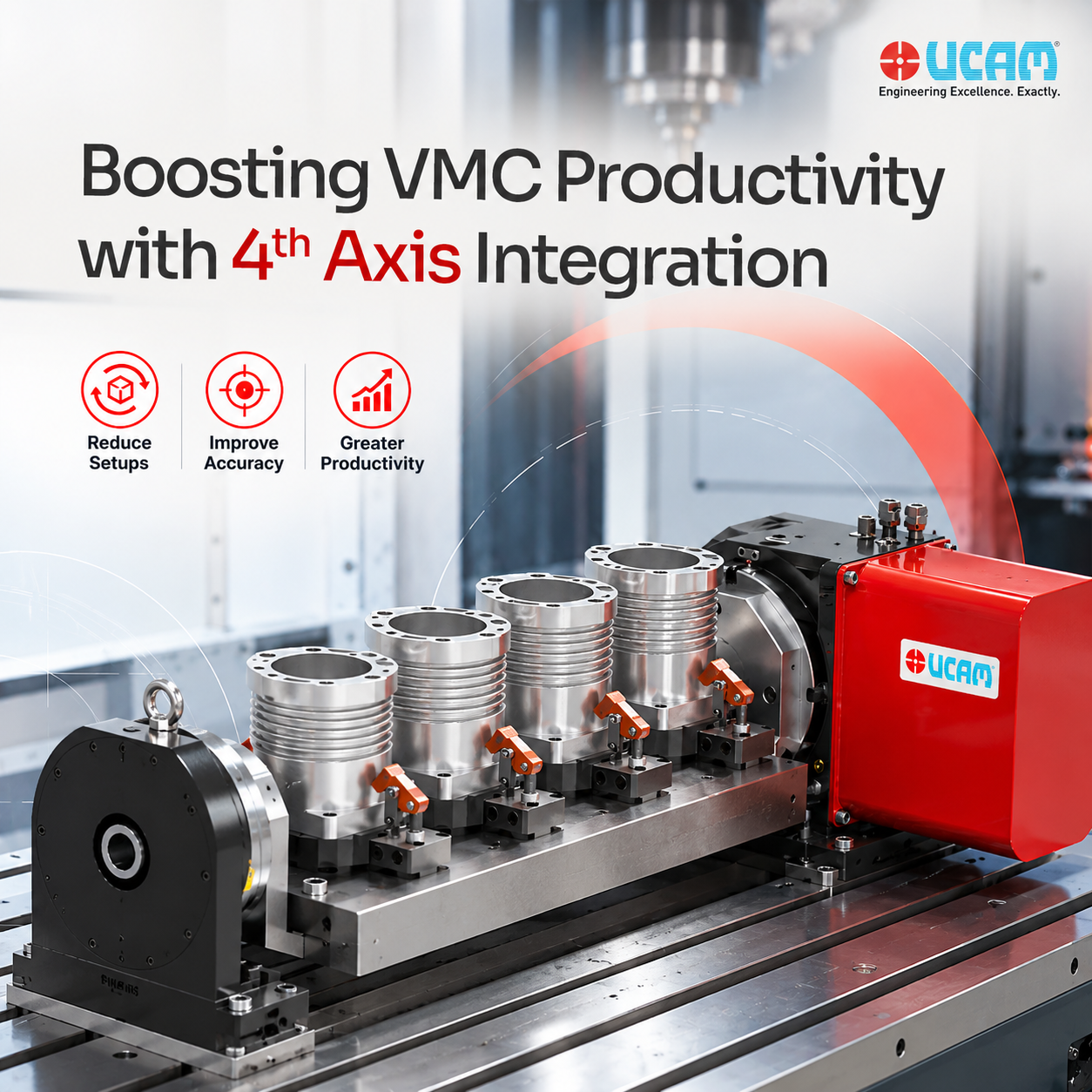
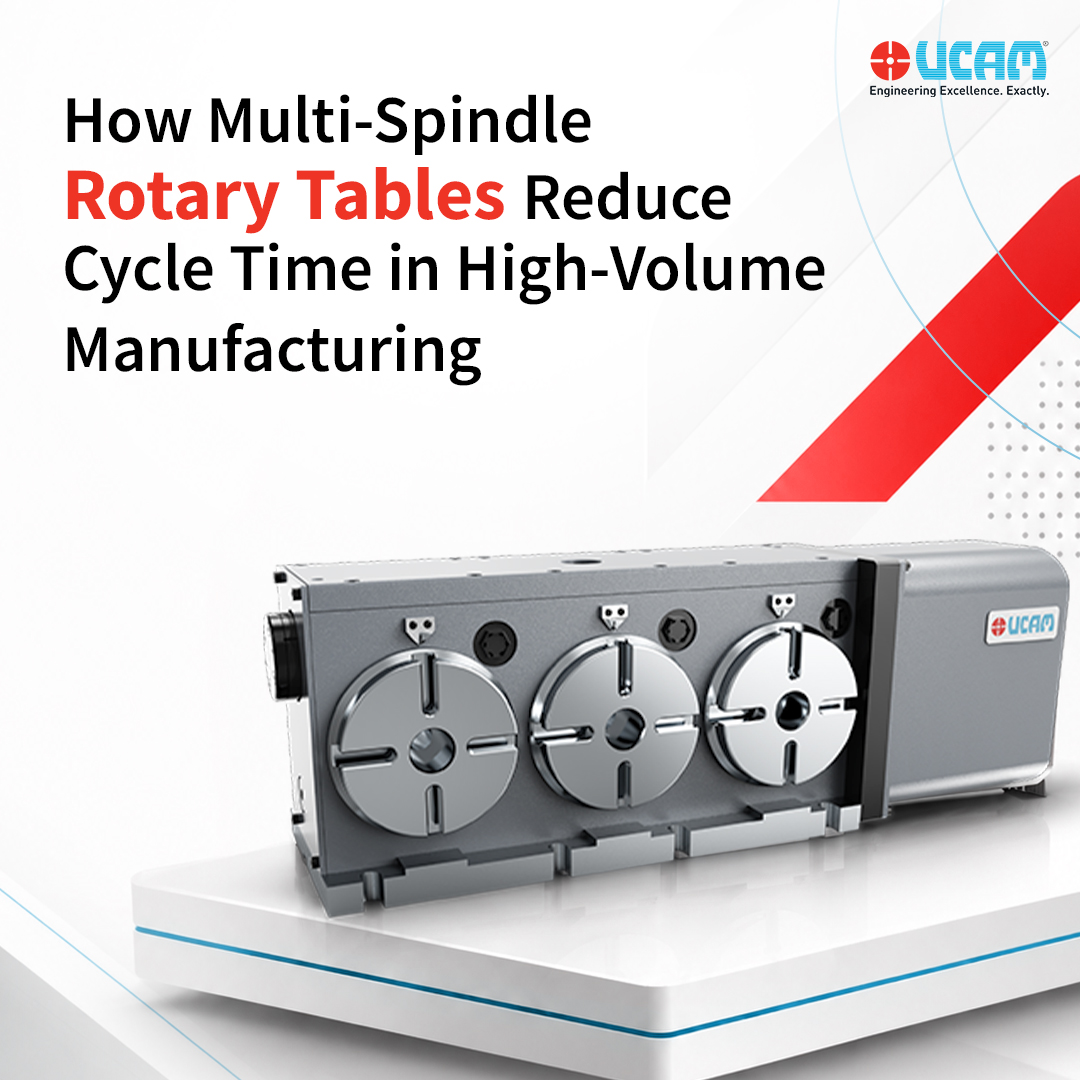
While a standard single-spindle Rotary Table significantly enhances VMC capabilities, a multi-spindle Rotary Table multiplies that operational efficiency exponentially. Engineered specifically for intensive high-volume manufacturing, these advanced units feature two, three, or four perfectly synchronized spindles mounted on a single, high-rigidity base. This configuration achieves profound cycle time reduction through several distinct mechanical advantages:
1. Consolidation of Tool Changes
Tool changes are an unavoidable necessity in multi-featured machining, yet they represent entirely non-productive time. Consider a standard automotive transmission housing that requires face milling, the drilling of a precise bolt circle, and rigid tapping. In a single-part configuration, the VMC performs three distinct tool changes per component. If an operator machines a batch of four parts sequentially on a traditional fixture, the machine must execute twelve individual tool changes.
With a four-spindle Rotary Table, four identical castings are securely clamped into the machine simultaneously. The VMC loads the drilling tool once, drills the required holes across all four components via synchronized table indexing, and only then performs a tool change for the tapping operation. This highly efficient methodology reduces the frequency of tool changes by an astounding 70 percent, unlocking massive, measurable gains in CNC productivity.
2. Simultaneous Multi-Part Machining
Beyond consolidating tool changes, the synchronized rotation of a multi-spindle Rotary Table allows the machine to index all loaded components at the exact same moment. Driven by a single, high-torque servo motor, the Rotary Table rotates the entire batch to the next required machining angle in fractions of a second.
This simultaneous presentation ensures that the X, Y, and Z axes of the VMC travel highly optimized, shortened tool paths. Instead of traversing the entire length of the machine bed between separate parts, the cutting tool moves minimal distances from one spindle axis to the next. The result is a beautifully synchronized machining cycle that maximizes hourly output and ensures an incredibly smooth production flow.
3. High-Speed, Zero-Backlash Precision
Modern multi-spindle Rotary Tables utilize state-of-the-art internal drive mechanisms to deliver lightning-fast, highly accurate positioning. Premium systems feature advanced dual-lead worm gear assemblies or direct-drive torque motors that provide exceptional zero-backlash precision. This sophisticated engineering guarantees that even during rapid, high-inertia indexing cycles, the Rotary Table locks into position with sub-micron accuracy. By executing indexing movements seamlessly and rigidly, manufacturers successfully strip wasted seconds from every cycle.
Streamlining Setup Time and Maximizing Factory Footprint
In the automotive and general engineering industries, reducing setup time is a primary strategic objective. Lengthy changeovers between distinct product batches inhibit manufacturing flexibility. A multi-spindle Rotary Table elegantly streamlines the setup process through a “one-time clamping” philosophy. Because multiple components are secured into specialized, highly repeatable fixtures simultaneously, operators spend significantly less time clamping, aligning, and verifying individual parts.
Furthermore, multi-spindle Rotary Tables offer an exceptional solution for scaling production yields without expanding the physical factory footprint. Instead of purchasing an additional VMC to meet rising production quotas—which requires substantial capital and valuable floor space—a facility can simply equip its existing machines with multi-spindle technology. This effectively multiplies the output of a single machine footprint, representing a highly intelligent utilization of existing manufacturing assets.
Global Manufacturing Efficiency: The UAE Perspective
The drive for superior CNC productivity inspires manufacturers in rapidly expanding industrial regions to adopt sophisticated automation. The UAE serves as a prime example of a region successfully leveraging advanced machining technologies to achieve extraordinary manufacturing efficiency. As the UAE enthusiastically diversifies its economy, local enterprises are adopting multi-spindle Rotary Tables to compete exceptionally well on the global stage.
By integrating advanced Rotary Table technology, manufacturers within growing industrial hubs effortlessly achieve the exceptional multi-axis accuracy demanded by top-tier global supply chains. Furthermore, this automation optimizes the utilization of the technical workforce, gracefully transitioning operators from repetitive handling tasks to highly valuable process optimization roles, ensuring that local factories maximize throughput and match the efficiency benchmarks of established global manufacturing leaders.
Enhancing Return on Investment (ROI)
The financial benefits of profound cycle time reduction extend far beyond the immediate increase in parts produced per hour. By completing machining cycles significantly faster, the direct operational cost associated with producing each component drops substantially. The facility utilizes less electricity per part and expertly amortizes the initial capital investment over a much larger volume of successful products.
Furthermore, reducing cycle times essentially unlocks “hidden” machining capacity. This newly available time allows the shop to confidently take on additional contracts and secure highly profitable new business without the immediate need to purchase another VMC.
Conclusion
The pursuit of absolute manufacturing excellence requires continuous innovation. For automotive and general engineering facilities striving to lead their respective markets, the multi-spindle Rotary Table represents a highly strategic, incredibly rewarding investment. By brilliantly consolidating tool changes and presenting multiple components simultaneously, these advanced systems guarantee massive improvements in CNC productivity. Embracing this highly sophisticated Rotary Table technology ensures that your facility remains agile, highly profitable, and perfectly equipped to thrive in the prosperous future of high-volume manufacturing.
FAQs
How exactly do multi-spindle rotary tables reduce CNC cycle times?
They achieve major time savings primarily through tool change consolidation. Instead of executing multiple tool changes for a single component, the CNC machine applies one tool across all simultaneously loaded parts before changing to the next tool. This strategy can reduce non-productive tool change time by up to 75%.
Can a multi-spindle setup increase production without adding new machines?
Yes. Equipping an existing Vertical Machining Center (VMC) with a multi-spindle rotary table multiplies the output of that single machine footprint. It unlocks hidden machining capacity and scales production yields without the substantial capital expense or floor space required to purchase an additional VMC.
Does machining multiple parts at once compromise dimensional accuracy?
No. In fact, it often improves consistency. Premium multi-spindle tables utilize zero-backlash drive mechanisms for highly precise, simultaneous indexing. Because multiple components are secured in a “one-time clamping” setup, it eliminates the microscopic alignment errors associated with repetitive, manual re-fixturing.


 ucam_marketing