
 22 May 2026
 2258
2258When upgrading a Vertical Machining Center (VMC) or Horizontal Machining Center (HMC) for multi-axis operations, manufacturers often run into a hard physical limitation: workpiece length. Standard rotary tables are exceptional for prismatic parts, but when tasked with holding exceptionally long, oversized, or cylindrical components, they fall short. The workpiece extends too far into the machining envelope, creating severe swing clearance issues, dangerous vibrations, and forcing operators into highly inefficient, multi-setup workarounds.
To overcome these physical barriers and maintain sub-micron precision, engineering and production teams turn to specialized workholding solutions: Large Bore CNC Rotary Tables.
What is a Large Thru-Bore Rotary Table?
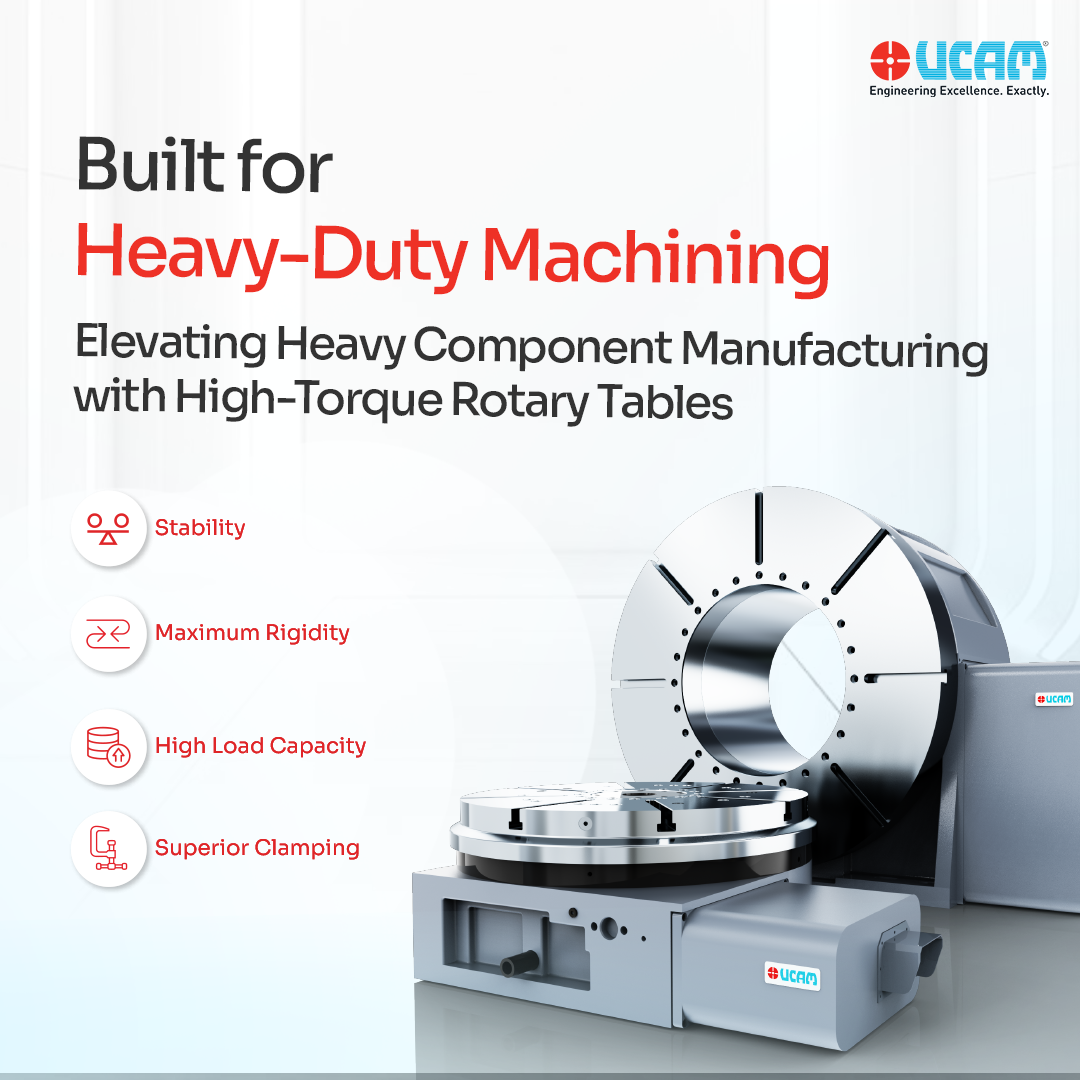
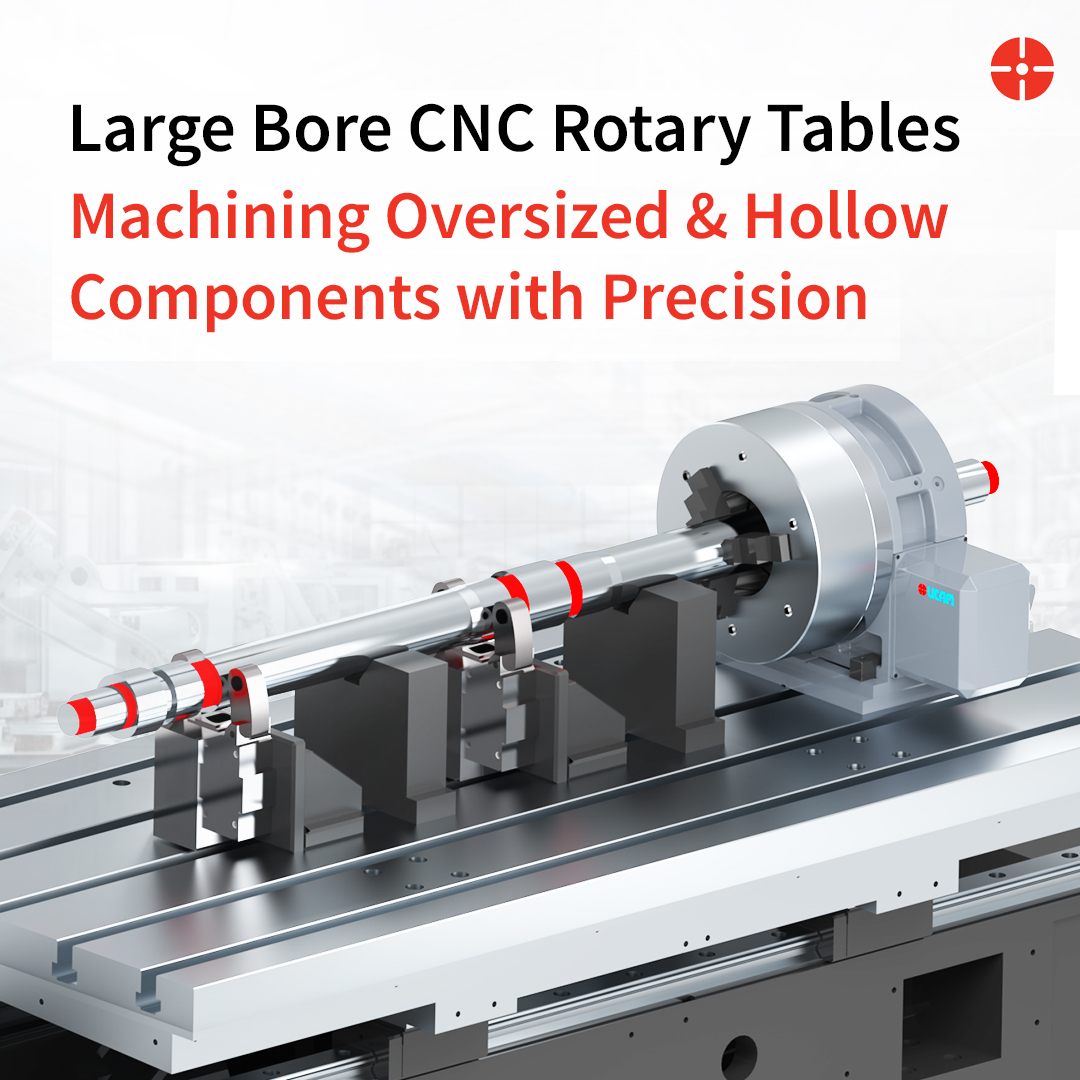
A large thru-bore rotary table is specifically engineered with a massive central aperture that passes completely through the rotary platter and the cast-iron table housing. Often referred to as a hollow centre rotary table, this design allows long shafts, pipes, or bar stock to be fed directly through the center of the table.
Instead of gripping a long shaft solely at its end—which creates a massive, unsupported overhang prone to chatter—the hollow bore allows the workpiece to be swallowed by the table. The chuck grips the component much closer to the actual cutting zone. This radically improves machining rigidity, minimizes tool deflection, and frees up critical Z-axis and X-axis clearance inside the CNC machine enclosure.
Critical Industries Relying on Hollow Bore Technology
The ability to process exceptionally long components in a single setup makes these tables indispensable for heavy-duty industrial sectors:
- Oil & Gas: Downhole drilling tools, drill collars, and massive valves require precise machining along their entire length. Reliable oil gas pipe machining rotary capabilities are strictly required to mill complex slots and drill intersecting radial holes on long tubular parts.
- Aerospace: Landing gear struts, structural aerospace tubes, and actuator housings demand the highest levels of concentricity, which can only be achieved if the part is rigidly supported and machined in a single setup.
- Energy & Power Generation: Wind turbine shafts, generator rotors, and large-scale transmission components require heavy-duty rotary axes capable of rotating massive off-center weights.
- Heavy Equipment: Earth-moving machinery relies on massive hydraulic cylinders and drive shafts that exceed the dimensional limits of standard workholding.
Key Components Machined
By utilizing a hollow centre rotary table, CNC machines can effortlessly process geometries that would otherwise require specialized lathes. Common components include:
- Drive Shafts & Axles: Cutting precise involute splines, keyways, and gear teeth at various intervals along a long shaft.
- Pipes and Tubes: Threading, cross-hole drilling, and porting on extended lengths of heavy-walled tubing.
- Deep Flanges: Machining complex bolt-hole circles and sealing faces on oversized valve flanges.
- Hydraulic Cylinders: Precision boring and porting of long, heavy-duty cylinder tubes.
The UCAM Range: Mastering Heavy-Duty Machining
To meet the extreme demands of these industries, UCAM has engineered a specialized lineup of Large Bore CNC Rotary Tables. Designed for absolute rigidity and seamless integration, two standout models provide exceptional capability for oversized components:
- The ULBQ 250: The ULBQ 250 rotary table is a heavy-duty powerhouse designed for mid-to-large-scale tubular machining. Featuring a generous through-bore, it easily swallows long shafts while delivering exceptional indexing accuracy. You can explore its full technical specifications on the ULBQ 250 model page.
- The ULBR 320: For the most extreme oversized applications, the ULBR 320 offers an even larger central aperture and massive load-carrying capabilities. Designed to rotate heavily unbalanced loads, it is the ultimate solution for large-scale energy and aerospace components. Discover more on the ULBR 320 model page.
- The ULBQ 250: The ULBQ 250 rotary table is a heavy-duty powerhouse designed for mid-to-large-scale tubular machining. Featuring a generous through-bore, it easily swallows long shafts while delivering exceptional indexing accuracy. You can explore its full technical specifications on the ULBQ 250 model page.
Load Capacity and the Hydraulic Clamping Advantage
Machining massive shafts and pipes generates extreme cutting forces, especially when the tool is far from the centerline of rotation. A rotary table in this environment must possess a massive load capacity and an unyielding braking system.
UCAM’s large bore tables utilize advanced Hydraulic Clamping Systems. Unlike pneumatic brakes, which use compressible air and can flex under heavy milling, hydraulic fluid is incompressible. When the table locks, hydraulic pressure wraps a 360-degree clamping sleeve around the rotary spindle. This fuses the platter and the housing into a single, rigid block, allowing operators to push aggressive feed rates and heavy depths of cut without inducing chatter.
Conclusion
For machine shops processing long, heavy, or tubular components, traditional workholding is a costly bottleneck. Upgrading to Large Bore CNC Rotary Tables eliminates swing clearance issues, maximizes rigidity, and slashes cycle times by allowing multi-axis machining on oversized parts in a single setup. If your facility is ready to take on larger, more lucrative contracts in the energy, oil, or aerospace sectors, explore our complete lineup of solutions at UCAM.
FAQs
What is the primary advantage of a large thru-bore rotary table?
The main advantage is its massive hollow center, which allows exceptionally long parts—like pipes and shafts—to pass directly through the table. This reduces workpiece overhang, dramatically increases cutting rigidity, and saves valuable space inside the CNC machine enclosure.
What industries benefit the most from a hollow centre rotary table?
These tables are essential for industries that manufacture long, cylindrical, or heavy components. They are heavily utilized in oil & gas for pipe and valve machining, aerospace for landing gears, and the energy sector for massive generator and turbine shafts.
How does the ULBQ 250 rotary table prevent vibrations during heavy cuts?
The ULBQ 250 utilizes a high-torque, 360-degree hydraulic clamping system. Because hydraulic fluid cannot be compressed, the brake holds the massive workpiece absolutely rigid against extreme cutting forces, completely eliminating the micro-vibrations and chatter associated with standard pneumatic brakes.


 ucam_marketing