
 21 July 2023
 20007
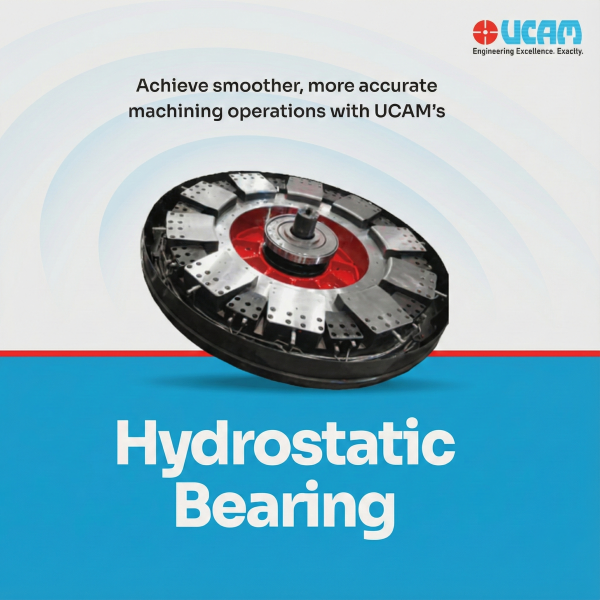
20007Hydrostatic bearings are a type of fluid film bearings commonly used in precision machinery and processes, including the manufacturing sector, where accuracy and reliability are critical.
These bearings work on the principle of supporting a load by pressurizing a thin film of fluid. This fluid film creates a cushion that prevents direct contact between the bearing surfaces, reducing friction, and wear & tear.
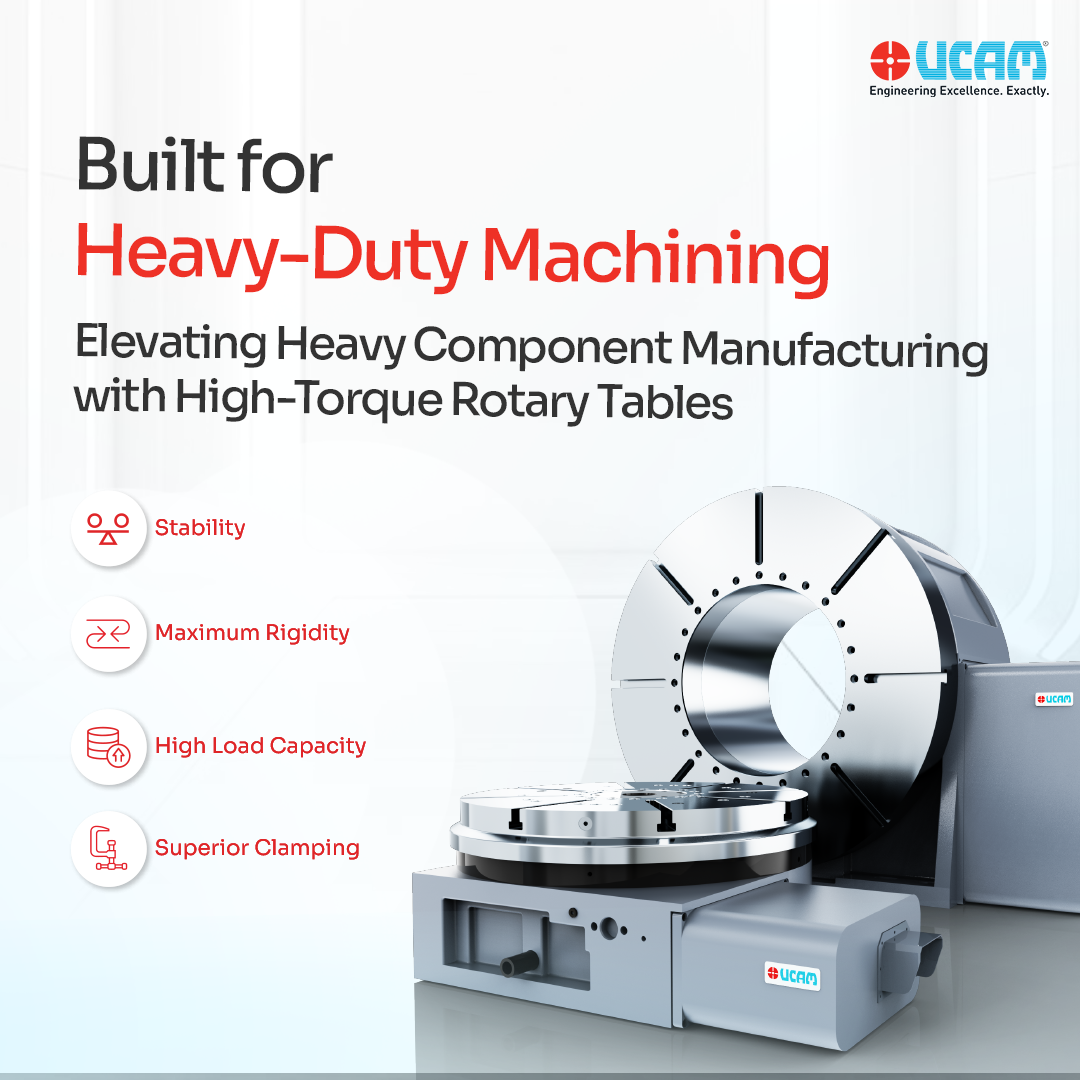
This cutting-edge technology is mainly used in UCAM’s state-of-the-art medium and large-sized rotary tables for heavy-duty, high-speed, and high-precision applications because of their:
- Greater load capacity
- Higher stiffness, and
- Increased damping
UCAM is dedicated to providing its clients with unmatched performance, and superior stability rotary tables to enhance your machining processes!
The use of our cutting-edge technology – the hydrostatic bearing is a testament to our commitment to innovate and engineer excellence, ensuring that our customers receive the best solutions for their machining needs.
FAQs
What is a hydrostatic bearing in a Rotary Table?
A hydrostatic bearing uses a continuous flow of pressurized fluid to support the table’s load. This creates a zero-friction fluid film between moving parts, eliminating mechanical wear.
What are the advantages of hydrostatic bearings for CNC machining?
They offer exceptional load-carrying capacity and massive vibration damping. This allows a Rotary Table to rotate incredibly smoothly, yielding superior surface finishes on heavy workpieces.
Can a hydrostatic Rotary Table handle heavy workpieces?
Absolutely. Because the load is supported by pressurized fluid rather than physical ball bearings, hydrostatic Rotary Tables are ideal for supporting and machining massive industrial components.


 ucam_marketing