
 24 August 2026
 262
262“As manufacturers across the UAE move into higher-complexity component production, matching the right rotary table to the right application matters more than ever.”
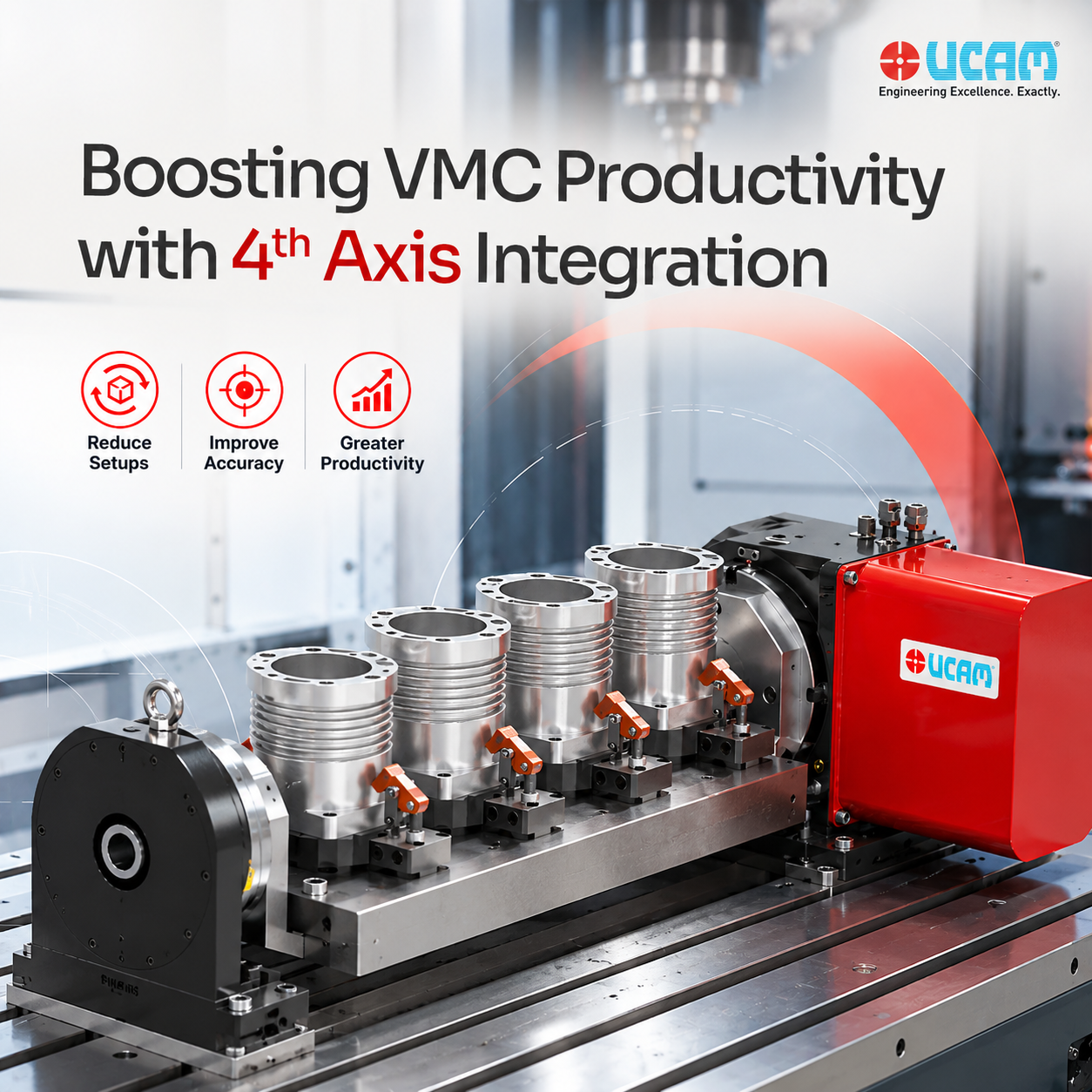
The transition from standard 3-axis milling to multi-axis machining is a fundamental requirement for remaining competitive in the global supply chain. As emerging industrial hubs look to diversify their manufacturing capabilities, the demand for high-tolerance components has surged. At the heart of this factory floor transformation is the CNC Rotary Table. an engineering upgrade that adds critical rotational axes to existing Vertical Machining Centers (VMCs), instantly expanding their operational envelope.
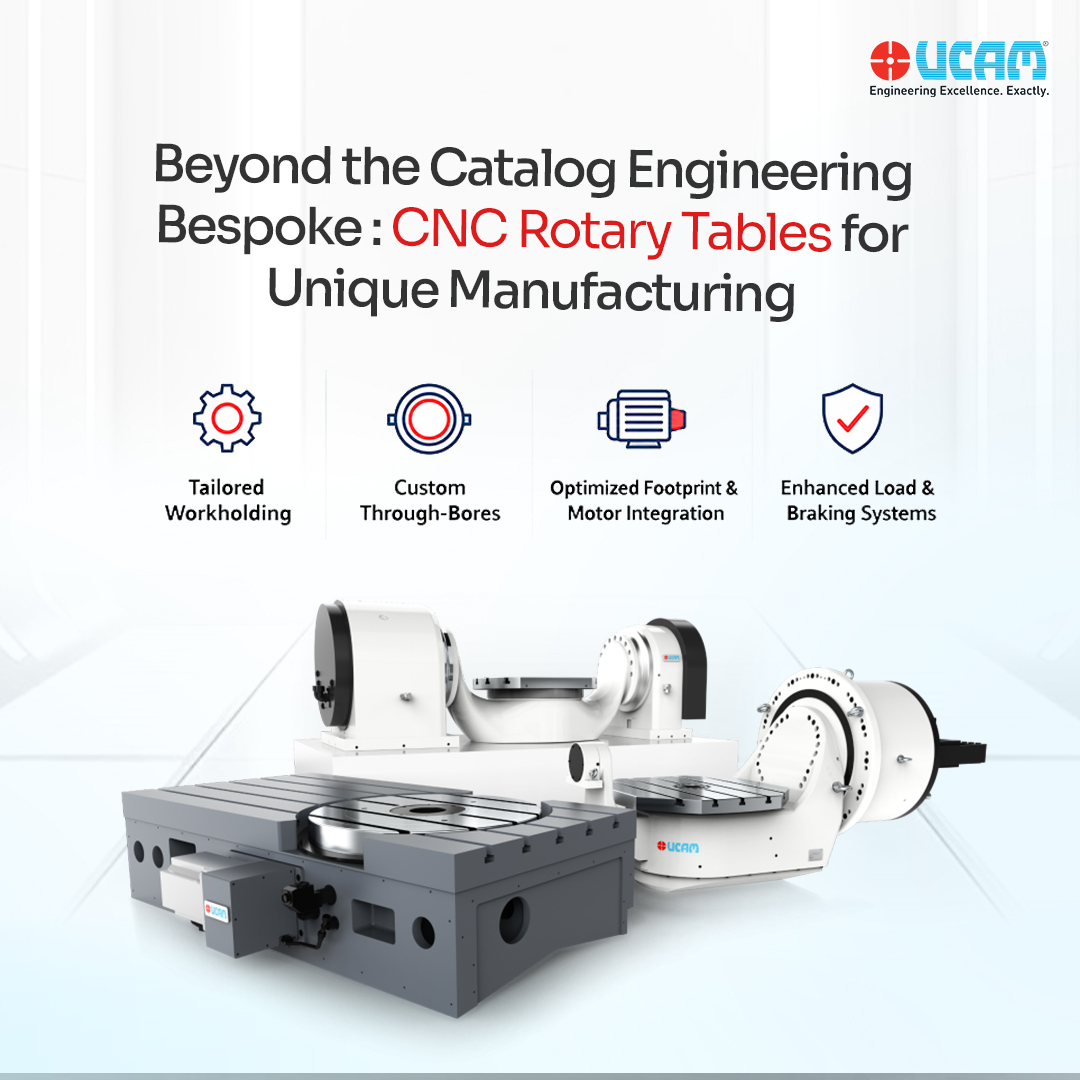
However, a universal, one-size-fits-all approach to workholding often leads to severe production bottlenecks. Integrating a generic CNC Rotary Table into a specialized workflow without considering the unique physical demands of the part can cause excessive vibration, inaccurate indexing, and premature spindle wear. To maximize Return on Capital Employed (ROCE) and dramatically boost Overall Equipment Effectiveness (OEE), industrial buyers must specify rotary equipment based precisely on the mechanical demands of their target industry.
The Aerospace Sector: Uncompromising Precision and Complex Contours
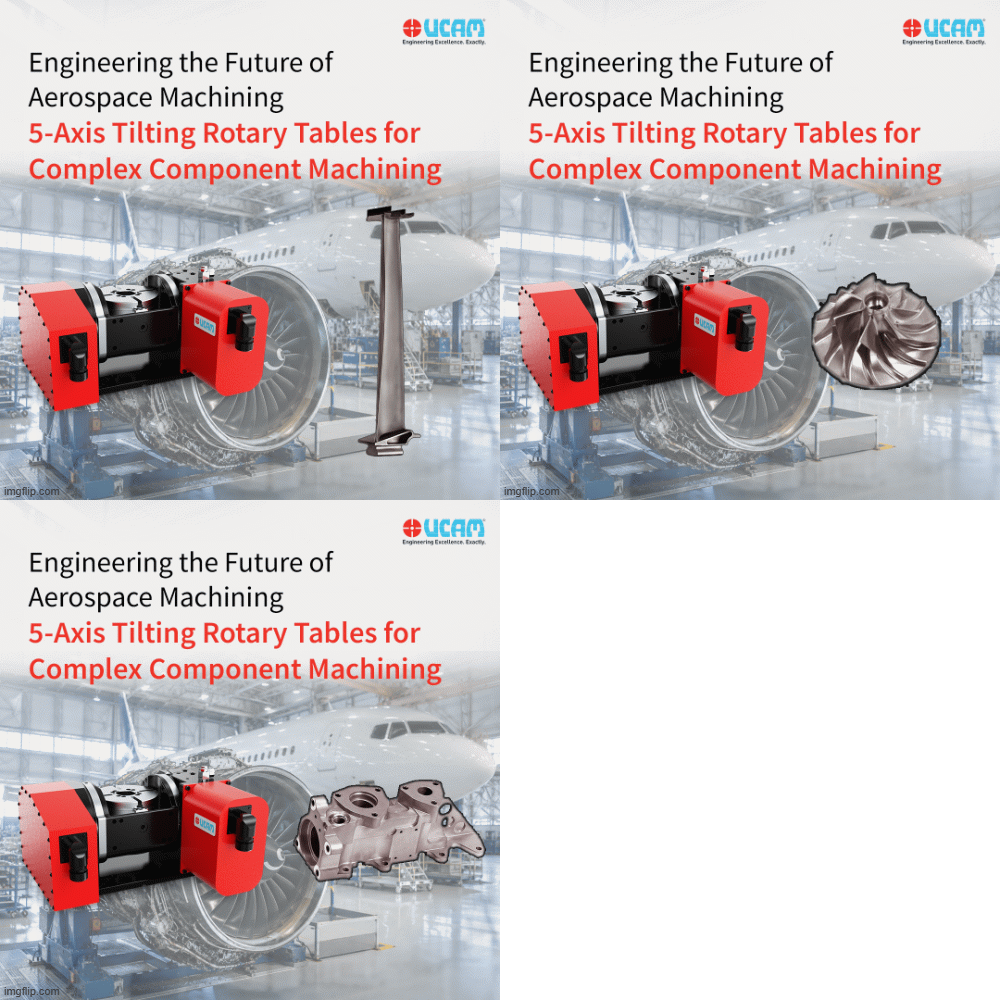
Aerospace manufacturing operates under some of the most unforgiving parameters in the industrial sector. As the global aerospace supply chain expands and advanced MRO facilities take on more complex component repairs, the requirement for flawless geometric accuracy is skyrocketing. Critical components such as turbine engine blades, landing gear fittings, and structural airframe brackets feature sweeping aerodynamic curves, thin walls, and complex internal cavities.
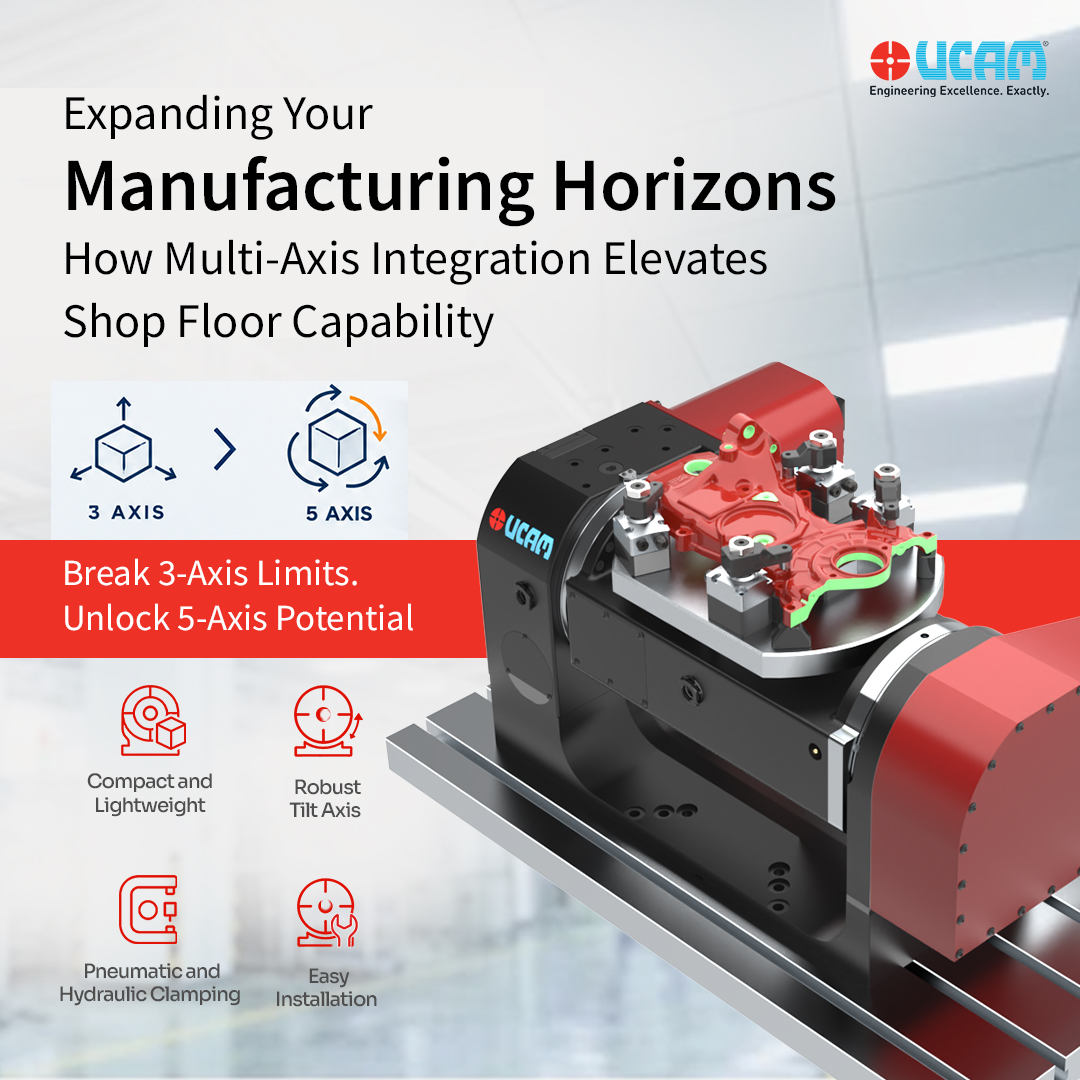
To machine these highly optimized features from notoriously difficult alloys like Ti-6Al-4V titanium and heat-resistant Inconel, facilities rely on a precision rotary table equipped with zero-backlash drive mechanisms. Standard positional indexing is insufficient for these freeform surfaces. Instead, upgrading to a specialized 4th Axis Rotary Table or a full 5-axis trunnion allows the cutting tool to maintain continuous, perpendicular contact with the workpiece during simultaneous multi-axis interpolation. This eliminates the microscopic tolerance stack-up that occurs when parts are manually re-fixtured. The result is a high-precision surface finish, reduced cycle times, and the absolute assurance that mission-critical parts meet strict aviation standards.
Automotive Manufacturing: High Volume Meets Heavy Rigidity
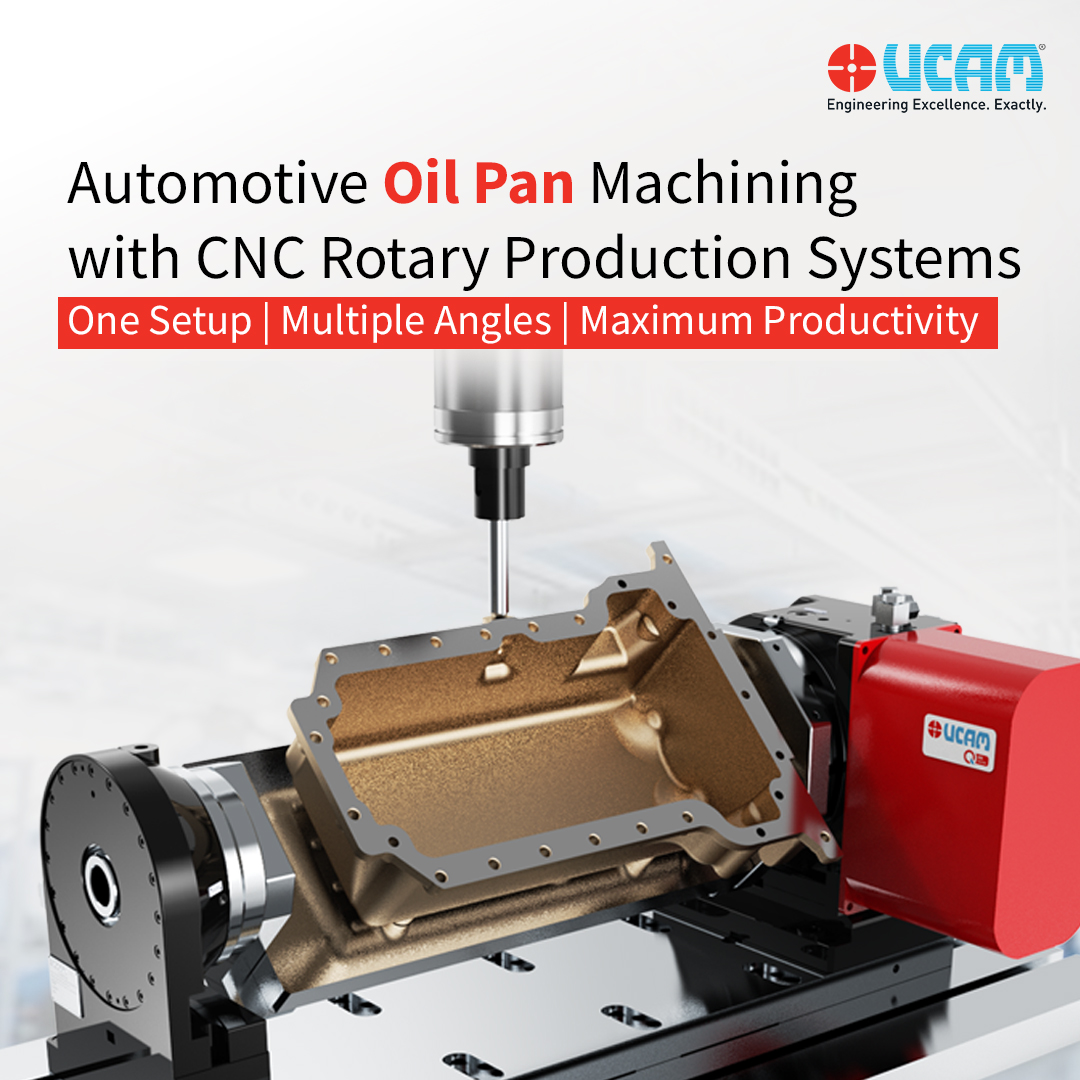
In the automotive sector, profitability hinges on a delicate balance: minimizing cycle times while maintaining strict quality control over continuous production runs. Vital drivetrain components such as engine blocks, cylinder heads, brake calipers, and intricate gearbox housings require precise drilling, tapping, and deep boring operations across multiple intersecting planes.
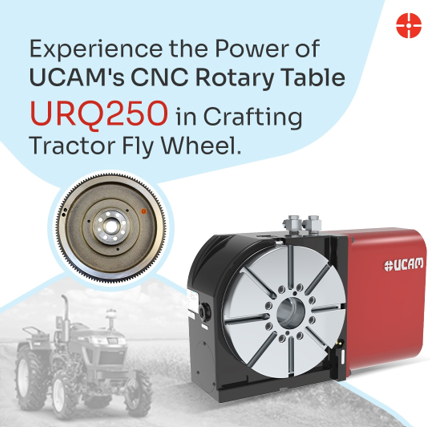
To achieve a single-setup machining environment, automotive suppliers frequently integrate a programmable rotary indexing table directly into their robotic production cells. This allows the VMC spindle to access three or four sides of a complex engine casing without any manual operator intervention.
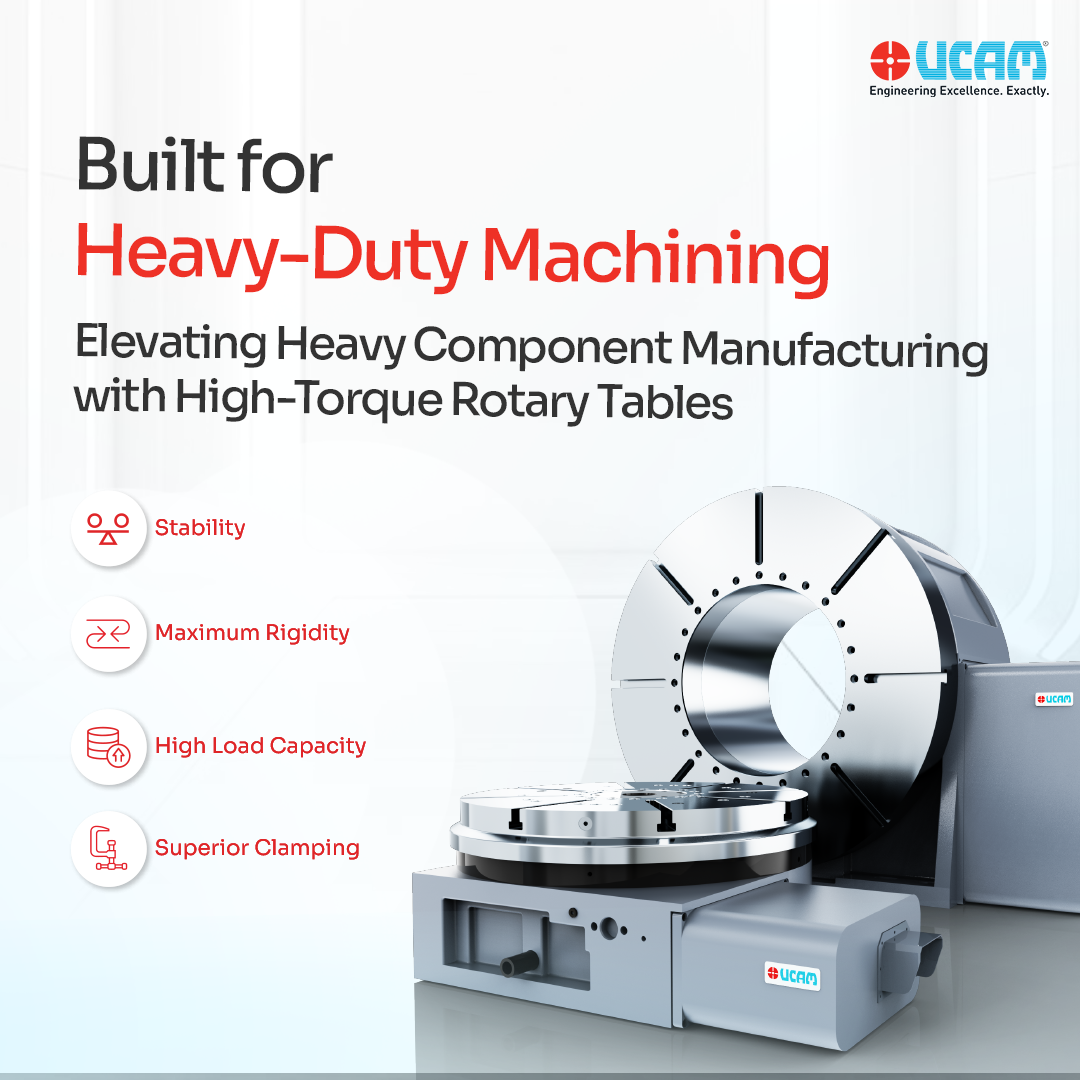
Because automotive castings are heavy, bulky, and often asymmetrical, the rotary system must possess immense structural rigidity to handle the eccentric loads. A Heavy Duty Rotary table with a high-pressure hydraulic clamping system is absolutely essential. Incompressible hydraulic fluid provides uncompromising locking torque, fusing the table firmly in place. This guarantees that highly aggressive face milling operations can be executed without inducing harmonic vibration, or “chatter.” This purpose-built setup slashes non-cutting transition times and virtually eliminates scrap rates caused by handling errors.
Energy and Oil & Gas: Managing Massive Payloads
The energy sector—particularly the oil and gas infrastructure critical to the Middle East—demands components that can withstand extreme subterranean pressures and corrosive environments. Manufacturing massive high-pressure flow control valves, blow-out preventers, and specialized carbide-tipped drill bits presents a unique mechanical challenge to the machine shop: extreme weight and eccentric mass distribution.
When machining a massive, off-center forged steel valve, centrifugal forces and heavy radial cutting loads are immense. A standard CNC Rotary Table will quickly experience bearing strain and severe radial runout under these punishing conditions. Facilities serving the heavy energy sector must utilize a specialized Heavy Duty Rotary table engineered with pre-loaded axial-radial cross-roller bearings.
These bearings distribute massive thrust and radial cutting forces across a much wider surface area, providing unparalleled dynamic stiffness. Coupled with an oversized hydraulic braking system and high-torque dual-lead worm gears, these heavy-duty systems can safely index payloads exceeding several tons. This empowers energy sector suppliers to machine colossal parts with sub-micron precision, completely redefining what standard VMCs can handle.
Medical Device Manufacturing: Micro-Precision on a Macro Scale
On the exact opposite end of the size spectrum lies the medical device industry, where heavy-duty payload capacity is swapped for micro-level, life-saving precision. The production of orthopedic implants, complex spinal screws, and intricate surgical instruments requires navigating highly complex geometries on extremely small, delicate workpieces.
In this highly regulated sector, a high speed precision rotary table is a non-negotiable asset. Medical components cannot tolerate even a fraction of a millimeter of deviation, as human biocompatibility is directly involved. A compact 4th axis rotary table provides the smooth, 360-degree continuous rotation needed to accurately machine complex, organic biological shapes.
By utilizing advanced direct-drive torque motors or finely tuned mechanical gear sets, these compact tables provide rapid, frictionless indexing with absolute zero mechanical play. When combined with modular zero-point clamping systems, medical manufacturers achieve flawless, burr-free finishes that easily meet strict FDA and international healthcare regulations.
Conclusion
Across every high-stakes industrial sector, the path to sustained operational excellence requires moving beyond the limitations of traditional three-axis machinery. Upgrading a VMC with a purpose-built cnc rotary table—whether it is a massive rotary indexing table designed for multi-ton oil valves, or a highly dynamic table built for aerospace impellers—dramatically elevates spindle utilization. By carefully analyzing part geometries, payload weights, and specific cutting forces, industrial buyers can procure the exact rotary technology required to eliminate stubborn production bottlenecks, eradicate scrap, and confidently secure high-margin manufacturing contracts.
FAQs
What is the difference between positional indexing and simultaneous 4-axis machining?
Positional indexing rotates the part to a specific angle, locks it securely, and then cuts. Simultaneous machining rotates the part while the tool is actively cutting, which is necessary for creating complex, sweeping shapes like turbine blades.
What is the most important spec to look for in a heavy-duty rotary table?
Hydraulic clamping torque. When cutting heavy materials, pneumatic (air) brakes act like a sponge and allow the part to vibrate. Hydraulic systems use incompressible fluid to lock the table perfectly solid, preventing chatter and tool breakage.
How do compact rotary tables benefit medical device manufacturing?
Medical implants and surgical tools cannot tolerate even a fraction of a millimeter of error. Compact 4th-axis tables use highly tuned gear sets or frictionless motors to provide ultra-fast, micro-level precision with zero mechanical play. This ensures the burr-free, flawless geometries required to meet strict FDA and healthcare biocompatibility standards.


 ucam_marketing