
 17 August 2026
 353
353In the high-volume automotive manufacturing sector, protecting profit margins requires intense scrutiny of cycle times and spindle utilization. Machining heavy, asymmetrical cast components has traditionally been one of the most persistent bottlenecks on the factory floor. Every minute a machine sits idle while an operator manually wrestles a massive casting into a new fixture represents lost revenue and reduced Overall Equipment Effectiveness (OEE).
One of the most complex components to process efficiently is the engine oil pan. Between managing the sheer physical weight of the raw material and re-fixturing the bulky part for multiple operational angles, cycle times can easily balloon.
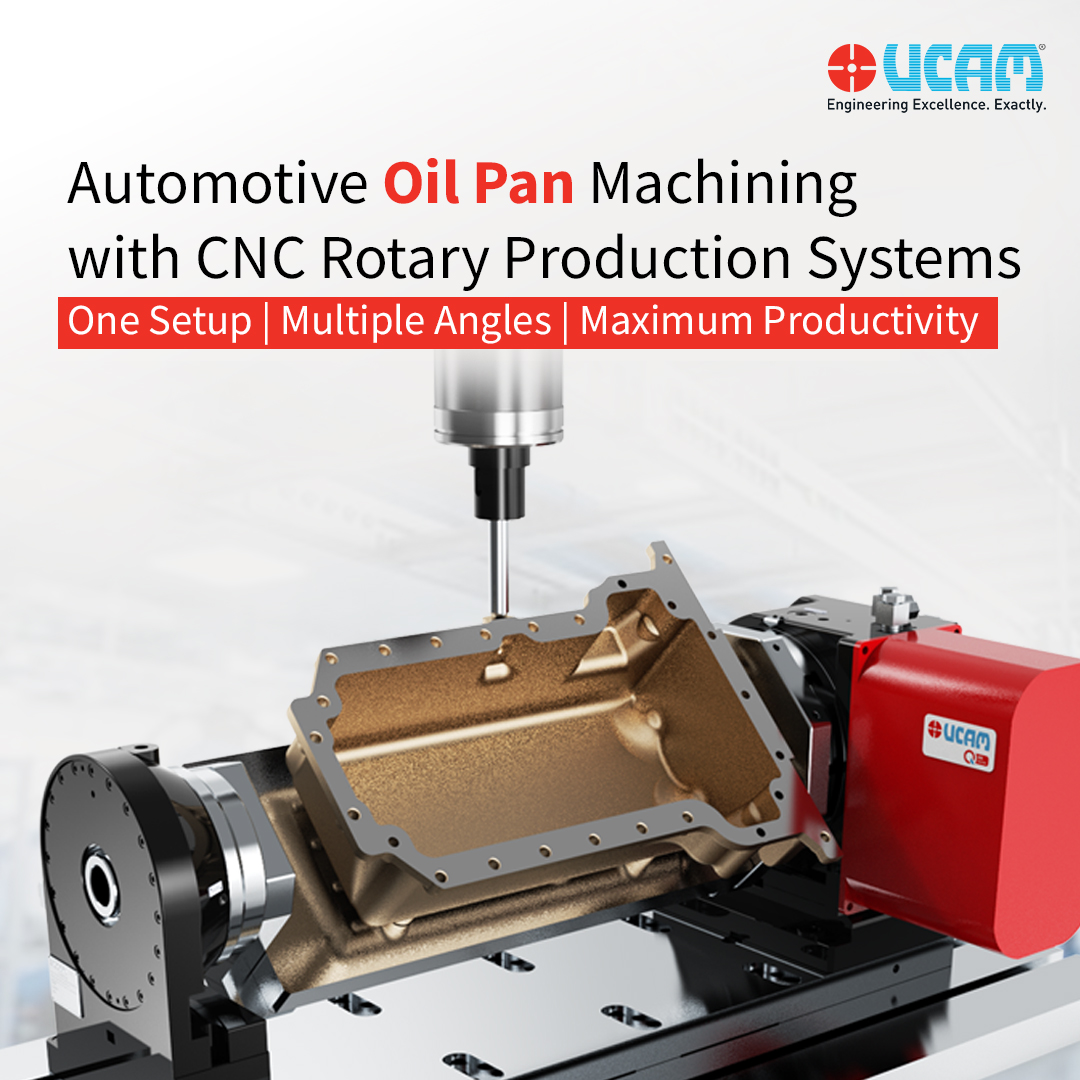
A recent technical demonstration by UCAM highlights a powerful mechanical solution to this exact bottleneck: utilizing a highly engineered CNC Rotary Production System to execute complete automotive oil pan machining in a single, unyielding setup.
The Challenge of Heavy Component Manufacturing
Automotive oil pans feature rigid bottom-mount designs that require high-precision machining across multiple, often intersecting planes. When processing these heavy castings on a standard 3-axis Vertical Machining Center, manufacturing engineers face a specific set of mechanical hurdles.
The typical challenges include:
- Weight and Eccentric Loads: Safely clamping a 20kg to 30kg asymmetrical component is inherently difficult. When the part rotates, it creates an off-center mass. If the workholding lacks dynamic stiffness, this imbalance will induce chatter (harmonic vibration) during aggressive material removal, destroying the surface finish and accelerating tool wear.
- Complex Intersecting Geometry: An oil pan requires multi-hole drilling on flat mating surfaces, broad face milling for the engine block gasket interface, and the precise execution of complex 45-degree angular holes for drain plugs and sensor ports.
- Wasted Cycle Time (Tolerance Stack-Up): Traditionally, hitting all necessary angles requires moving the heavy part across three or four different manual setups. This not only consumes massive amounts of operator time but also introduces microscopic alignment errors with every new clamp—a phenomenon known as tolerance stack-up.
The “Done-in-One” Method: Single-Setup Machining
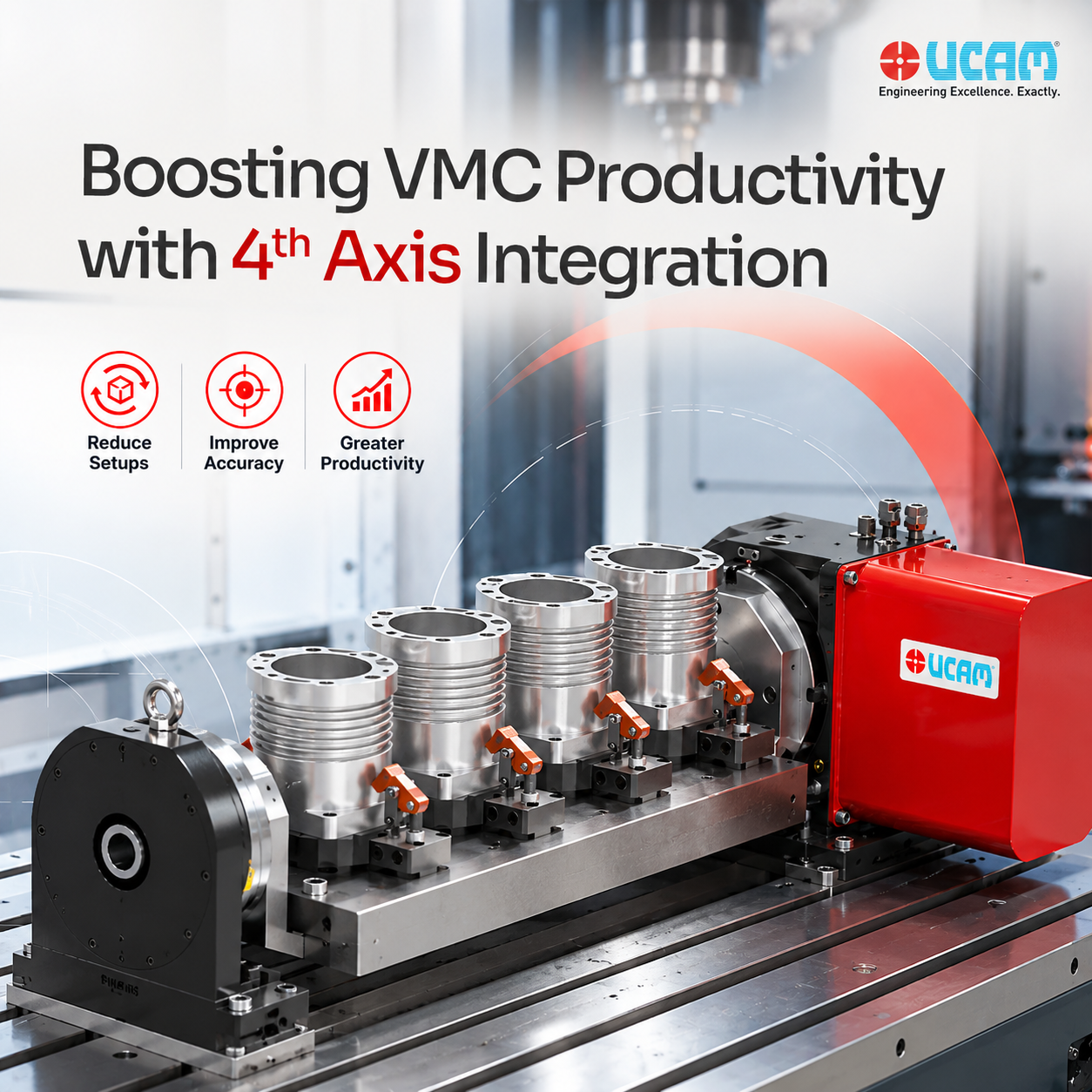
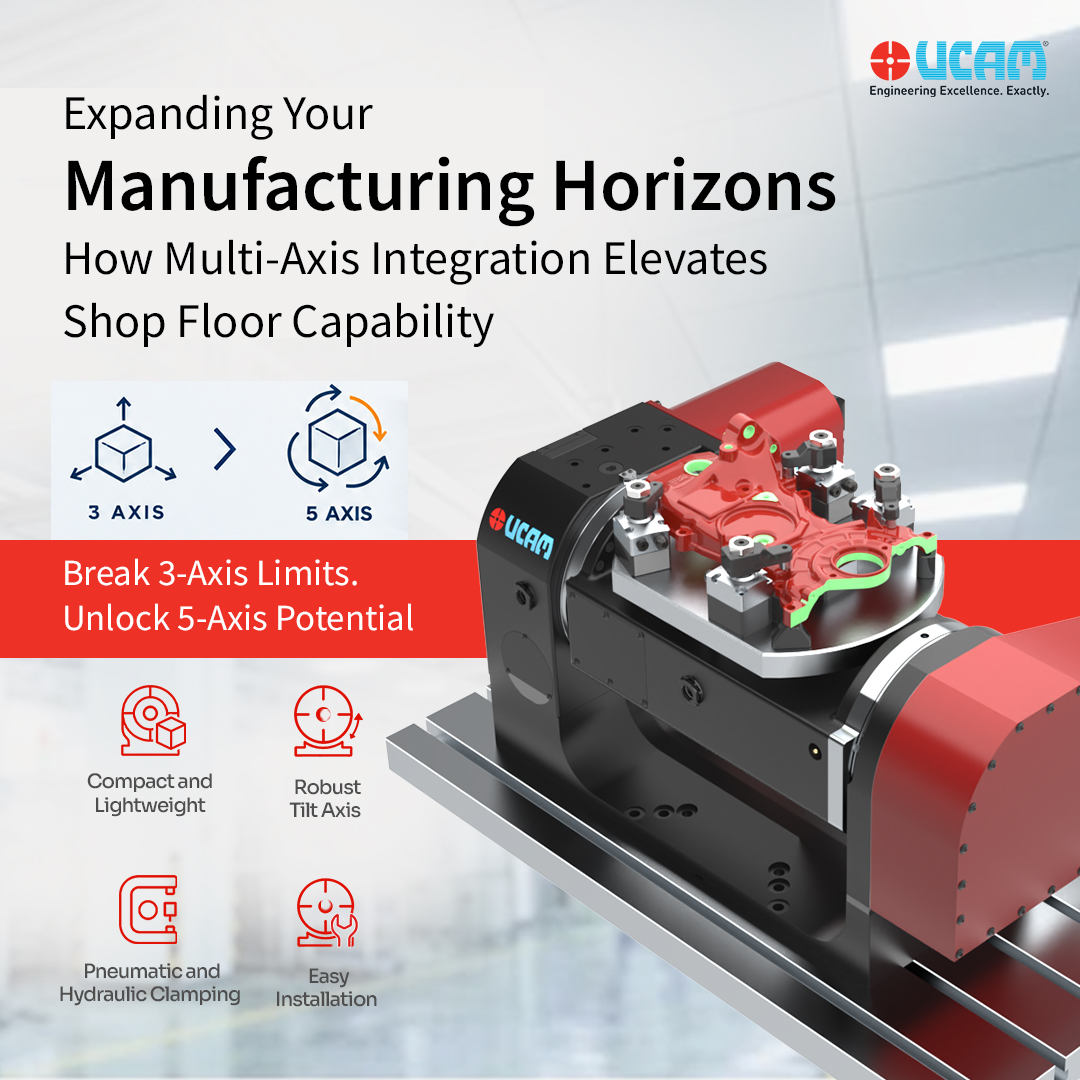
To maximize output and geometric precision, the most effective strategy is the transition to single-setup machining. Rather than investing millions in a dedicated 5-axis machine specifically for oil pans, facilities can upgrade their existing VMCs. By integrating a heavy-duty rotary table, engineers introduce precise rotational axes that allow the spindle to access multiple sides of the casting without operator intervention.
In the demonstrated setup, UCAM utilized the UCAM URPQ 250HS combined with a highly specialized, rigidly engineered fixturing strategy. Because an oil pan is deep and bulky, clearance is a major issue. By elevating the component with a precision-ground 60mm height block, engineers provided the machine spindle with the necessary clearance to access all required angular surfaces without crashing into the table housing.
To handle the immense 30kg off-center load, the setup employs a heavy-duty faceplate tailstock, structural L-brackets, and a robust fixture plate. This specific configuration guarantees maximum structural stability. It locks the component down securely, counteracting the immense cutting forces generated during multi-axis machining and allowing the cutting tools to perform aggressive metal removal without sacrificing sub-micron accuracy.
Technical Execution with the UCAM URPQ 250HS
The success of this operation relies directly on the mechanical capabilities of the rotary system driving the fixture.
By utilizing a robust CNC Rotary Production System, the machine executes the following critical operations seamlessly in one continuous CNC program:
- Multi-Hole Drilling: The table indexes securely to present the flat flange to the spindle, executing rapid multi-hole drilling for the mounting bolts.
- Heavy Face Milling: Face milling requires immense holding torque to prevent the part from shifting. The table locks hydraulically, providing the dynamic stiffness needed to face mill the critical gasket mating surfaces perfectly flat, ensuring zero oil leakage on the final engine assembly.
- Angular Drilling: The table rotates exactly 45 degrees and locks. This allows standard, rigid drills to execute the angular sensor holes precisely, completely eliminating the need for expensive, custom-angled fixtures or specialized right-angle milling heads.
Engineering Specifications
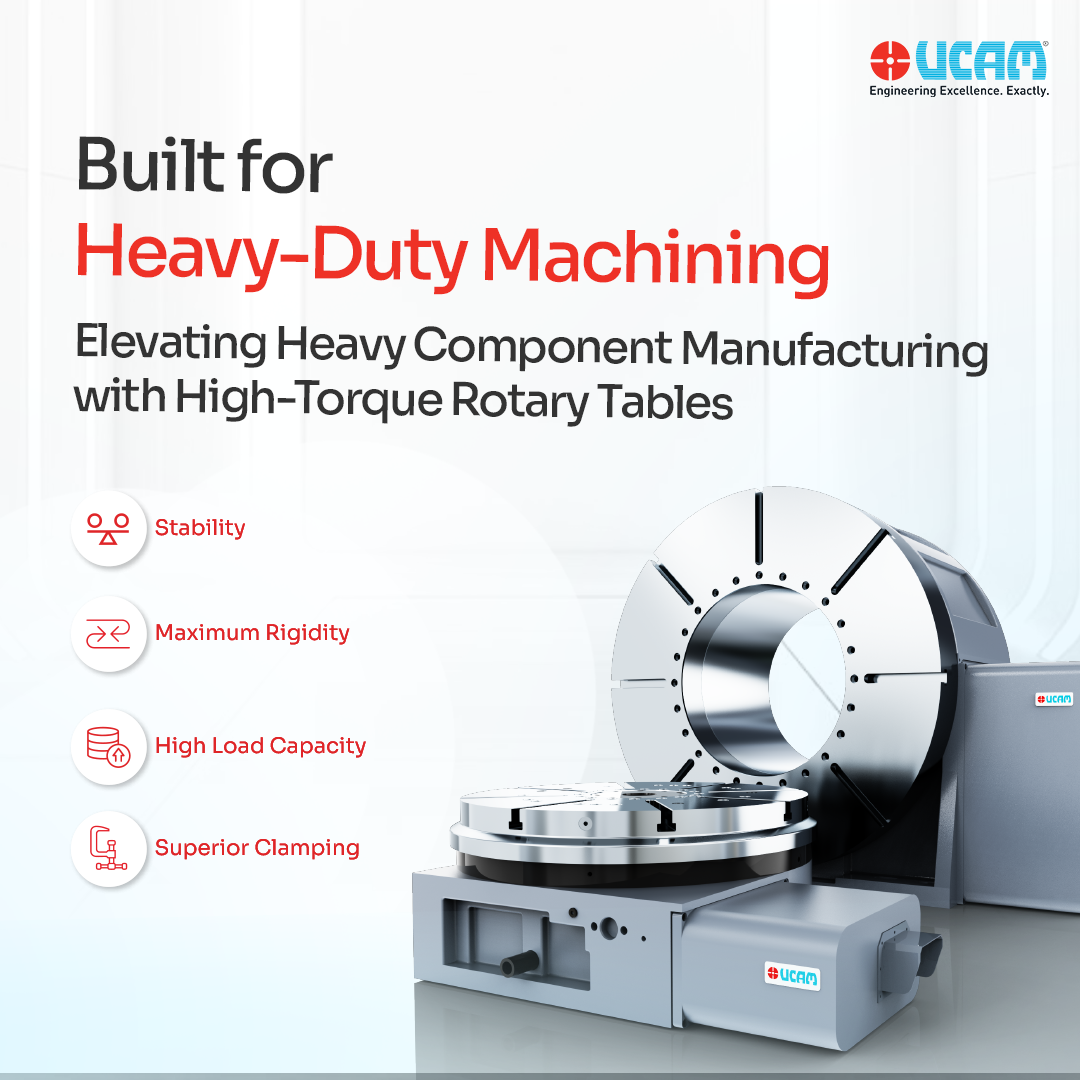
The UCAM URPQ series is built specifically for these types of high-load, high-torque applications. Here is a breakdown of the technical specifications that make this demanding single-setup machining possible:
- System Type: CNC Rotary Production System. This system upgrades a standard VMC into a multi-axis cell.
- Load Carrying Capacity: 350 kg. It easily supports heavy 30kg automotive castings and massive custom fixture plates without bearing strain.
- Clamp Torque: 1500 Nm (@ 30 Bar). High-pressure hydraulic clamping provides unyielding rigidity for aggressive face milling.
- Indexing Accuracy: 15″ Arc Sec. This ensures perfect alignment for intersecting angular holes and features.
- Repeatability: 6″ Arc Sec. This specification guarantees identical part quality across high-volume automotive production runs.
The ROI of Cycle Time Reduction
For production managers, transitioning to this method is a highly strategic financial decision. Upgrading a reliable VMC with the UCAM URPQ 250HS directly attacks the most expensive variables on the shop floor.
First, cycle time reduction is immediate. By consolidating three or four distinct setups into a single, uninterrupted program, non-cutting transition times plummet by up to 70%. The operator simply loads the raw casting once, presses cycle start, and removes a finished oil pan.
Secondly, standardizing the workholding around a rotary tailstock system eliminates the need to design, manufacture, and store large, dedicated angle fixtures for every new part variant. Finally, removing human error from the manual repositioning process effectively drops scrap rates to zero. When machining high volumes of expensive automotive castings, eliminating scrap protects facility profit margins and ensures uninterrupted delivery schedules to OEM partners.
The Production Advantage
The physical demands of automotive oil pan machining no longer require facilities to rely on inefficient, multi-setup workflows that drain productivity and introduce geometric errors.
By integrating a heavy-duty CNC Rotary Production System equipped with a tailstock and rigid fixturing, manufacturers can confidently embrace single-setup machining. This strategic equipment upgrade instantly maximizes spindle uptime, allows for aggressive cutting parameters, and guarantees the absolute precision required by the modern automotive supply chain. For facilities looking to scale their production without expanding their floor space, investing in robust rotary technology is the definitive path to operational excellence.


 ucam_marketing