
 27 July 2026
 342
342In modern high-volume manufacturing, overall profitability is directly tied to continuous machine spindle uptime. Integrating a multi-axis CNC rotary table into a Vertical Machining Center (VMC) significantly accelerates production throughput, reduces manual handling, and enables the precision machining of complex geometries. However, optimizing this capital investment requires more than exceptional mechanical engineering; it demands a highly reliable infrastructure of technical after-sales support.
For industrial buyers, reliable service and rapid parts availability are critical prerequisites before purchasing any industrial equipment. An idle machine awaiting replacement components results in severe operational losses. Maximizing machine uptime requires a dual commitment: a rigorously executed preventive maintenance protocol on the shop floor, supported seamlessly by a manufacturer capable of providing genuine CNC Rotary Table spare parts and expert global service.
The Strategic Alignment of Preventive Maintenance
Transitioning a facility from reactive troubleshooting to a structured, proactive rotary table maintenance program is a vital operational strategy. By treating rotary workholding with the same meticulous care applied to the main machine spindle, facilities prevent minor mechanical wear from escalating into catastrophic component failures.
While specific, day-to-day inspection checklists are vital for shop floor operators, the overarching strategy of preventive maintenance is designed to achieve highly specific facility objectives:
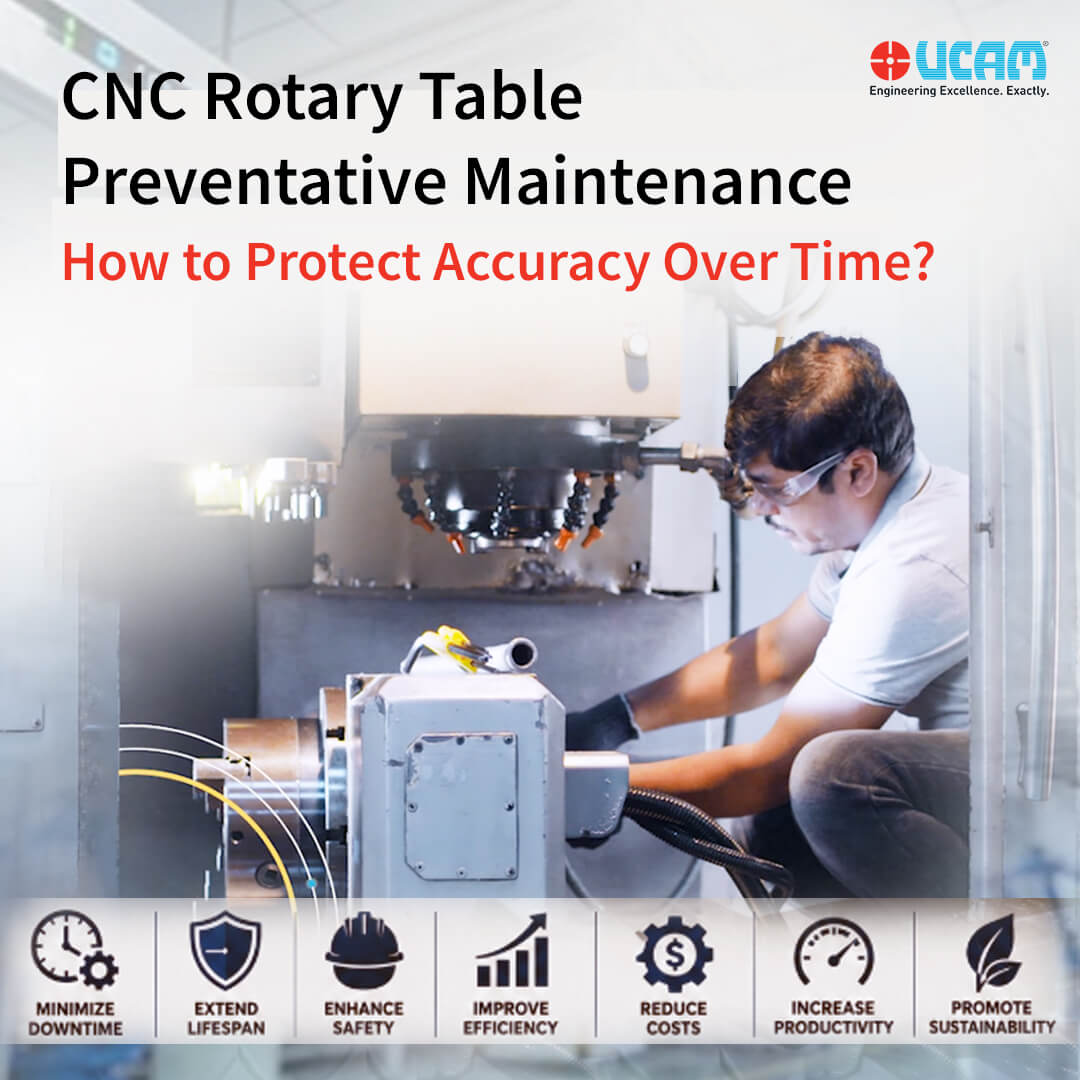
- Minimize Equipment Downtime: Ensure continuous, uninterrupted production cycles.
- Extend Equipment Lifespan: Protect and maximize the return on capital investments.
- Enhance Operational Safety: Maintain the structural integrity of high-pressure and electrical systems.
- Improve Machining Efficiency: Guarantee consistent, predictable setup and cycle times.
Cultivating a proactive maintenance culture requires focusing on three core pillars based on factory-recommended protocols:
- Dynamic Fluid Care Proactively managing and analyzing oils maintains optimal internal health. Operators must visually inspect the oil sight glass daily; the gear oil should rest exactly at the designated fill line, and any milky or cloudy appearance indicates contamination requiring an immediate halt to operations. Annually, gear oil must be completely drained and flushed to remove microscopic metal particulates that accumulate from natural wear.
- Precision Refinement Friction between gears causes natural wear, creating a microscopic mechanical clearance known as backlash. Executing regular, half-yearly backlash corrections is essential to consistently preserve sub-micron positioning accuracy and zero-backlash performance.
- Proactive Environmental Protection Coolant flooding into the gearbox or motor housing is a leading cause of failure. Inspecting breather valves, motor covers, and cable connection points monthly ensures coolant has not penetrated the housing, which would short-circuit the servo motor and rotary encoders. Furthermore, annual inspections of rubber seals (such as the oil filling plug seal) and protective outer cable conduits are mandatory to safeguard internal wiring from coolant ingress.
The Critical Role of Genuine CNC Rotary Table Spare Parts
Even with flawless adherence to a preventive maintenance schedule, industrial consumable components will eventually reach the end of their operational lifecycle. When seal degradation or bearing wear naturally occurs, the speed at which a facility can access genuine CNC rotary table spare parts dictates the severity and duration of the downtime.
Integrating aftermarket or non-standard parts severely compromises both the geometric alignment and the CNC integration of the table. To secure the integrity of the equipment, sourcing directly from the manufacturer is essential to guarantee the availability of original, high-quality components. Critical replacement parts include:
- Seal Kits: High-pressure O-rings, wiper seals, rotary cylinder seal kits, and brake side seal kits.
- Bearings: Pre-loaded axial-radial roller bearings and taper roller bearings built to handle extreme thrust and horizontal loads.
- Drivetrain Components: Precision dual-lead worm gear and worm shaft replacements.
- Electrical integration: Solenoid valves, rotary encoders, and heavy-duty conduits.
A highly responsive supply chain is a hallmark of industrial reliability. Ensuring that genuine replacement parts are dispatched internationally with minimal lead times protects production schedules regardless of the facility’s geographic location.
Global Service Infrastructure and Engineering Support
For high-volume manufacturers, establishing confidence in long-term technical support is paramount. An advanced industrial equipment provider must engineer a service ecosystem that matches the reliability of its physical hardware. Buyers cannot afford to wait weeks for an overseas technician to diagnose a simple software fault or mechanical misalignment.
To support the global market, leading manufacturers like UCAM provide a comprehensive and agile service infrastructure focused on direct support:
- Remote Diagnostics: Expert application engineers are readily available to guide local maintenance teams through complex parameter adjustments, backlash corrections, and CNC controller troubleshooting via immediate remote consultation.
- Factory Reconditioning: For heavily used equipment, complete factory reconditioning is available. This process involves stripping the table down entirely and executing a full mechanical rebuild—replacing worn gears and bearings to restore original factory precision.
- Comprehensive Documentation: Technically accurate, highly detailed maintenance manuals and exploded parts diagrams empower facility engineers to service the equipment autonomously and safely.
- Global Service Networks: Strategic international partnerships and strategically deployed service technicians ensure that complex mechanical overhauls can be executed efficiently in any region, providing localized support with global technical expertise.
Conclusion
Achieving and sustaining maximum machine uptime requires a cohesive strategy that extends far beyond the initial equipment purchase. It demands a manufacturer fully committed to the entire lifecycle of the asset. By committing to foundational rotary table maintenance, utilizing exclusively genuine CNC Rotary Table spare parts, and leveraging an uncompromising global service network, manufacturing facilities can ensure their multi-axis equipment remains a highly accurate, profitable asset for decades.
FAQs
How often should the gear oil in a CNC Rotary Table be replaced?
Gear oil must be completely drained, flushed, and replaced annually. Over time, the oil naturally accumulates microscopic metal particulates from gear friction. If not flushed regularly, this contaminated oil acts as an abrasive, accelerating internal mechanical wear.
Why is hydraulic clamping pressure so critical during heavy machining?
Hydraulic fluid provides the massive, unyielding locking torque required to keep the table rigid during heavy material removal. If line pressure drops below factory specifications, the internal braking sleeve can flex under cutting loads. This flexing induces resonant vibrations (chatter) that destroy surface finishes and shatter carbide tooling.
What is the most common cause of Rotary Table electrical failure, and how is it prevented?
Coolant ingress into the motor housing is the leading cause of catastrophic electrical failure, as it immediately short-circuits the servo motor and absolute rotary encoders. This is proactively prevented by conducting monthly inspections of breather valves and cable connections, and by strictly adhering to the annual replacement of protective rubber seals and outer cable conduits.


 ucam_marketing